


The Window of Tolerance: Understanding and Expanding Emotional Regulation Capacity
- Jan 9
- 5 min read

Article written in collaboration with @martinaorlando_psicologa
Introduction
Emotional regulation represents one of the most central skills for psychological well-being. Over the past few decades, several neuroscientific models have helped clarify how humans manage stress, emotions, and relationships. Among these, the Window of Tolerance is today one of the most used concepts in contemporary psychotherapy to explain how the nervous system works in conditions of equilibrium or extreme activation (Siegel, 1999).
The Window of Tolerance describes the range within which a person is able to remain present, emotionally stable, and mentally flexible. Outside this range, it is easy to experience states of hyperactivation —similar to the fight-or-flight reaction— or hypoactivation, reminiscent of freezing or withdrawal (Porges, 2011). These movements do not represent personal failures, but automatic physiological responses.
Understanding this pattern allows people to develop greater self-compassion and recognize early signs of dysregulation. Furthermore, it offers a useful framework for body- and resource-based therapeutic interventions, which are now widely disseminated thanks to research on trauma and relationship neurobiology (Ogden et al., 2006).
The Window of Tolerance: definition and operation
The Tolerance Window was introduced by Daniel J. Siegel (1999) to describe the physiological state in which the autonomic nervous system maintains an optimal level of activation. Within this range, the individual can think clearly, regulate emotions, and stay connected with himself and others. It is not a state of absolute calm, but a condition of regulation.
When we are in our window, information from the body and the environment is processed in an integrated manner. The prefrontal cortex remains sufficiently active, enabling processes such as decision-making, planning, and empathy (Siegel, 2012). This allows you to respond to stimuli proportionally, rather than reacting impulsively.
The window of tolerance is dynamic: it widens or narrows based on personal history, relational context, and the psychophysical state of the moment. It is normal for us to oscillate slightly inside it during the day; this becomes problematic when the changes are frequent or intense, taking us out of the adjustment zone (Van der Kolk, 2014).
Overactivation: when the system goes “too hard”
Hyperactivation emerges when the level of stimulation exceeds the management capabilities of the nervous system. In this state, the body becomes alert and physiological responses similar to the fight-flight reaction are activated: increased heartbeat, rapid breathing, muscle tension and difficulty concentrating (Porges, 2011). Typical emotions include anxiety, irritability, and urgency.
Psychologically, hyperactivation can be perceived as “too”: too much thinking, too much feeling, too much reacting. People often report mental rumination, agitation, catastrophic thoughts, or difficulty calming down. In this condition, the ability to mentalize decreases and impulsive behaviors become more likely (Ogden et al., 2006).
It is important to remember that hyperactivation is not a sign of a weak or overly emotional character. It is a protective mechanism that the nervous system puts in place when it perceives a threat, real or anticipated. Understanding this process can help reduce self-criticism and develop more effective regulatory strategies.
Hypoactivation: when the system “shuts down”
In contrast to hyperactivation, hypoactivation represents a state of drastic reduction in energy and responsiveness. It is associated with the freezing or “quenching” reaction of the nervous system, described in much trauma research (Schauer & Elbert, 2010). People with hypoactivation often report intense tiredness, feelings of emptiness, slowing down, and emotional detachment.
Functionally, hypoactivation is a protective response. When the stress exceeds the capacity to handle it, the system “disconnects” to avoid further overload. This mechanism, although adaptive in traumatic situations, can become problematic in daily life, reducing motivation and the ability to remain present (Van der Kolk, 2014).
Many people don't recognize hypoactivation right away, confusing it with laziness, depression, or lack of willpower. But understanding that it is a physiological pattern helps develop a more compassionate attitude toward oneself and adopt gradual reactivation strategies.
Why the window shrinks
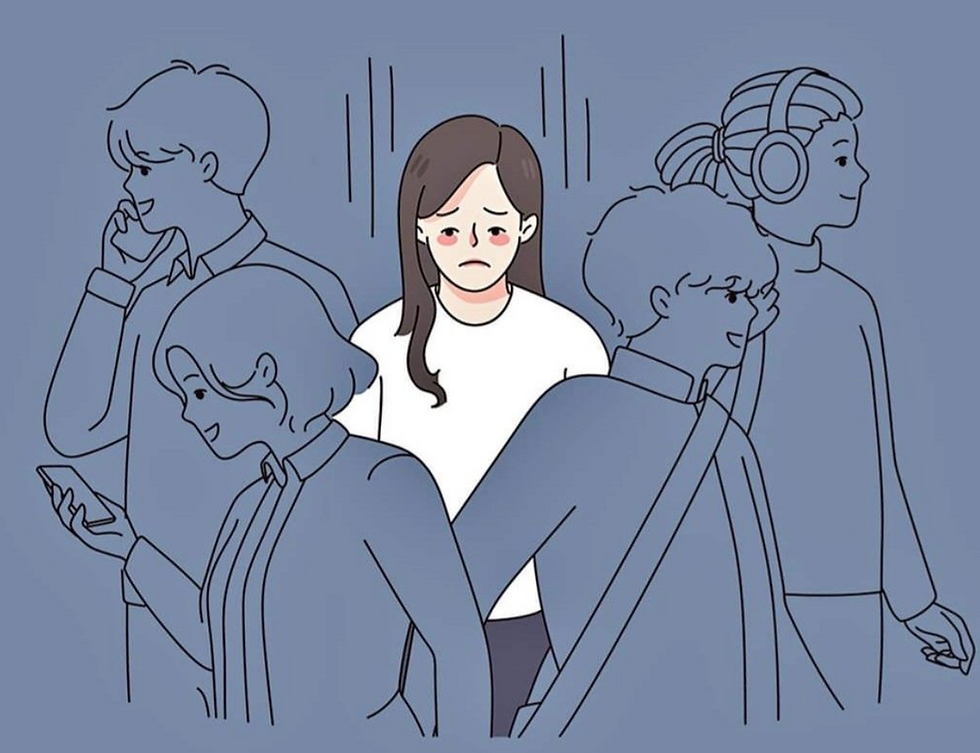
The tolerance window can become narrower due to several factors. Traumatic experiences, chronic stress, or relationship insecurities can reduce the flexibility of the nervous system, making it more sensitive to everyday stimuli (Rothschild, 2000). In these cases, even minor events can lead to hyperactivation or hypoactivation.
Current living conditions can further contribute to the narrowing of the window. Work overload, lack of sleep, social isolation, or mental load can decrease self-regulation ability. When resources are lowered, the stress tolerance threshold is reduced.
Why the window shrinks
The tolerance window can become narrower due to several factors. Traumatic experiences, chronic stress, or relationship insecurities can reduce the flexibility of the nervous system, making it more sensitive to everyday stimuli (Rothschild, 2000). In these cases, even minor events can lead to hyperactivation or hypoactivation.
Current living conditions can further contribute to the narrowing of the window. Work overload, lack of sleep, social isolation, or mental load can decrease self-regulation ability. When resources are lowered, the stress tolerance threshold is reduced.
Attachment history and early experiences also influence the development of the tolerance window. Secure, attuned relationships favor a more stable nervous system, while unpredictable or emotionally disorganized environments can lead to more extreme activation patterns (Siegel, 2012). This shows how deeply relational emotional regulation is.
Widening the Window: What Really Helps
The process of expanding the tolerance window is gradual and requires practices that involve body, mind, and relationship. Grounding techniques, mindful breathing, and attention to bodily states are essential tools for increasing the ability to remain present during emotional activations (Ogden et al., 2006).
Building routines that calm the nervous system also helps stabilize activation. Regular activities such as gentle movement, adequate sleep, and contact with nature promote greater physiological resilience. Small daily gestures can have a significant impact on long-term regulation.
Finally, psychotherapy —especially when it integrates relational and bodily aspects— helps to process past experiences and develop new response patterns. Co-regulation with a professional represents a powerful tool to expand the window of tolerance and re-establish a sense of internal security (Siegel, 2012; Van der Kolk, 2014).
Bibliographic References
Ogden, P., Minton, K., & Pain, C. (2006). Trauma and the body: A sensorimotor approach to psychotherapy. W.W. Norton.
Porges, S. W. (2011). The polyvagal theory: Neurophysiological foundations of emotions, attachment, communication, and self-regulation. W.W. Norton.
Rothschild, B. (2000). The body remembers: The psychophysiology of trauma and trauma treatment. W.W. Norton.
Schauer, M., & Elbert, T. (2010). Dissociation following traumatic stress: Etiology and treatment. Journal of Psychology, 218(2), 109–127.
Siegel, D. J. (1999). The developing mind: How relationships and the brain interact to shape who we are. Guilford Press.
Siegel, D. J. (2012). The developing mind (2nd ed.). Guilford Press.
Van der Kolk, B. (2014). The body keeps the score: Brain, mind, and body in the healing of trauma. Viking.


Comments