


Giftedness: A Complex Neurodivergence Beyond the Myth of Excellence
- Jan 27
- 5 min read

Article written in collaboration with @psyalessia_pasquali
Definition and Theoretical Models of Giftedness
Giftedness has historically been associated almost exclusively with intelligence quotient, but contemporary literature has largely moved beyond this reductionist view. At the beginning of the twentieth century, Lewis Terman initiated one of the first systematic studies on children with high cognitive potential, emphasizing that elevated intelligence was a relatively stable and measurable characteristic (Terman, 1925). However, his approach was strongly centered on quantitative aspects of intelligence and neglected fundamental dimensions such as creativity and motivation. Over time, this framework has shown significant limitations, particularly in understanding the complexity of the psychological functioning of gifted individuals. Subsequent research therefore began to integrate affective, environmental, and motivational variables. This paradigm shift led to a more dynamic and systemic conception of giftedness. Today, giftedness is considered a form of neurodivergence, characterized by atypical but non-pathological cognitive and emotional functioning.
One of the most influential contributions in this direction is Joseph Renzulli’s Three-Ring Model. According to this author, giftedness emerges from the interaction between above-average ability, creativity, and task commitment (Renzulli, 1978). This model highlights that the mere possession of high cognitive abilities is not sufficient to define an individual as gifted. Creativity allows abilities to be used in flexible and original ways, while motivation supports the effort necessary to transform potential into performance. Renzulli also distinguishes between general and specific abilities, emphasizing the multidimensional nature of talent. This perspective has had a significant impact on educational practices and identification criteria. It has also helped overcome an elitist view of giftedness, recognizing its variability and contextual nature.
A further theoretical advancement is represented by Françoys Gagné’s Differentiated Model of Giftedness and Talent (DMGT). In this model, giftedness is understood as a set of natural abilities that, through a developmental process mediated by personal and environmental factors, can be transformed into observable talents (Gagné, 2008). The DMGT clearly distinguishes between “giftedness” and “talent,” highlighting the crucial role of learning, training, and opportunities. Moreover, it introduces the concept of intrapersonal and environmental catalysts that can facilitate or hinder this transformation. Chance, understood as an unpredictable factor, is also recognized as relevant. This model is currently considered one of the most comprehensive and integrative. It allows giftedness to be understood as an evolving process rather than a static condition.
Cognitive and Emotional Characteristics of Giftedness
From a cognitive perspective, gifted individuals generally show a faster processing of information compared to the average. They tend to grasp complex relationships, formulate abstract hypotheses, and use metacognitive strategies at an early age. This thinking style is often accompanied by strong epistemic curiosity and an intense need for meaning. However, such characteristics may conflict with standardized and repetitive educational contexts. Boredom and demotivation therefore represent frequent experiences; even because their explorative system is very activated, hence they crave for exploring and finding out and when they don’t get, it might generate frustration. Furthermore, developmental asynchrony may result in an uneven cognitive profile, with excellence in some areas and vulnerability in others. This aspect makes giftedness difficult to recognize and sometimes misunderstood.
Alongside cognitive peculiarities, the literature highlights a marked emotional intensity in gifted individuals. They often show heightened sensitivity to internal and external stimuli, as well as deep empathy toward others (Neihart et al., 2002). Such intensity may translate into greater vulnerability to stress and anxiety. Perfectionism, frequently observed, represents both a resource and a risk factor. On the one hand, it supports high standards of performance; on the other, it can generate chronic dissatisfaction and fear of failure. Emotional reactions are often disproportionate to environmental expectations. This contributes to the perceived sense of difference and misunderstanding.
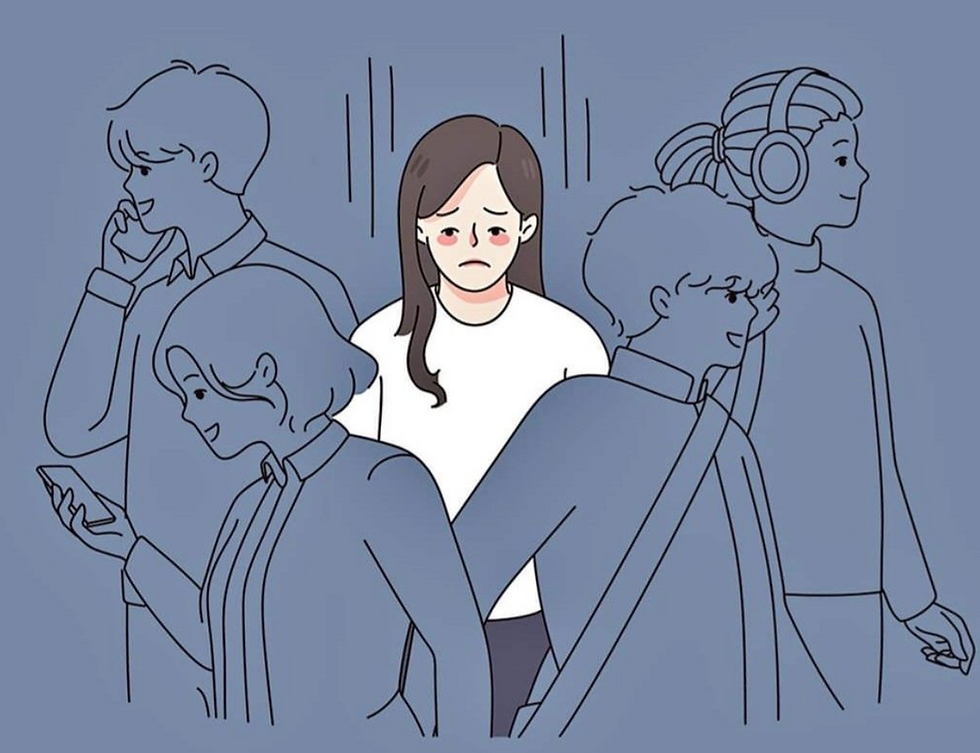
On a socio-relational level, gifted individuals may encounter significant difficulties. Differences in interests, language, and ways of thinking can hinder the construction of peer relationships. In developmental age, this may translate into isolation, social withdrawal, or conflict. In some cases, giftedness is masked through oppositional or maladaptive behaviors. Specifically for this reason, several times it’s challenging diagnosing, since it thinks, firstly, about a Oppositional Defiant Disorder (ODD) or other behavioral disorders. This confusion among diagnosis may lead to opt for wrong treatments, loss of trust in health professionists and an amplification of the sufference. Silverman (1997) emphasizes how the asynchrony between cognitive and emotional development represents one of the main sources of distress. The environment is often unprepared to recognize and accommodate these specific needs. This results in an underestimation of real difficulties, with a consequent risk of clinical and educational neglect.
Educational and Clinical Implications
The failure to identify giftedness can have significant consequences on the academic trajectory and psychological well-being. Numerous studies highlight an increased risk of disengagement, academic underachievement, and dropout among high-potential students who are not recognized (Renzulli, 2016). The discrepancy between abilities and environmental demands generates frustration and loss of motivation. In the absence of adequate stimulation, potential may remain unexpressed. Furthermore, the tendency to interpret behavioral difficulties as simple disciplinary problems hinders a functional understanding of distress. This approach may reinforce dynamics of stigmatization and self-devaluation. It is therefore essential to promote a multidimensional and contextualized assessment.
From an educational standpoint, flexible and personalized interventions are required. Curriculum enrichment, acceleration, and differentiated instruction represent effective strategies when applied appropriately (Gagné, 2008). However, attention should not be limited to cognitive aspects. Emotional and social education is a central element in fostering harmonious development. Teachers need specific training to recognize the signs of giftedness and to manage its atypical manifestations. Collaboration among school, family, and mental health professionals is essential. Only through an integrated approach is it possible to adequately support these students. Teachers as much as psychologists, who make diagnosis and collaborate with schools have to apply the note n. 562/2019, by MIUR; according to this note, giftedness is part of SEN, thus it’s mandatory to draw up a Personalized Learning Plan (PLP), which will help to draw a learning pathway for the student, appropriate to cognitive and emotional characteristics above-mentioned.
In the clinical context, giftedness requires an interpretation that avoids both pathologization and minimization. The clinician must consider high cognitive potential as a variable that modulates the expression of psychological distress. It’s necessary to consider that sometimes giftedness diagnosis leads to another diagnosis, so it might receive a double-diagnosis, such as anxiety disorders, ADHD, mood disorders, SLD, autistic spectrum disorders, behavioral disorders and sensory processing disorders. Anxiety disorders, mood disorders, and relational difficulties may assume particular forms in gifted individuals (Neihart et al., 2002). Effective intervention should enhance personal resources, promote self-awareness, and support identity development. It is important to help the person integrate their difference as a meaningful part of the Self. In this sense, giftedness is not only a set of abilities, but a specific way of being in the world.
Bibliographic References
Gagné, F. (2008). Building gifts into talents: Overview of the DMGT. In J. A. Plucker & C. M. Callahan (Eds.), Critical issues and practices in gifted education (pp. 61–79). Prufrock Press.
Neihart, M., Reis, S. M., Robinson, N. M., & Moon, S. M. (2002). The social and emotional development of gifted children: What do we know? Prufrock Press.
Renzulli, J. S. (1978). What makes giftedness? Reexamining a definition. Phi Delta Kappan, 60(3), 180–184.
Renzulli, J. S. (2016). The Three-Ring Conception of Giftedness: A developmental model for promoting creative productivity. In S. M. Reis (Ed.), Reflections on gifted education (pp. 55–70). Prufrock Press.
Silverman, L. K. (1997). The construct of asynchronous development. Peabody Journal of Education, 72(3–4), 36–58.
Terman, L. M. (1925). Genetic studies of genius: Vol. 1. Mental and physical traits of a thousand gifted children. Stanford University Press.


Comments