


EMPATHY AND MIRROR NEURONS: Why isn't observing an emotion enough to truly feel it?
- Nov 27, 2025
- 6 min read

Post written in collaboration with @semidipsicologia
Introduction
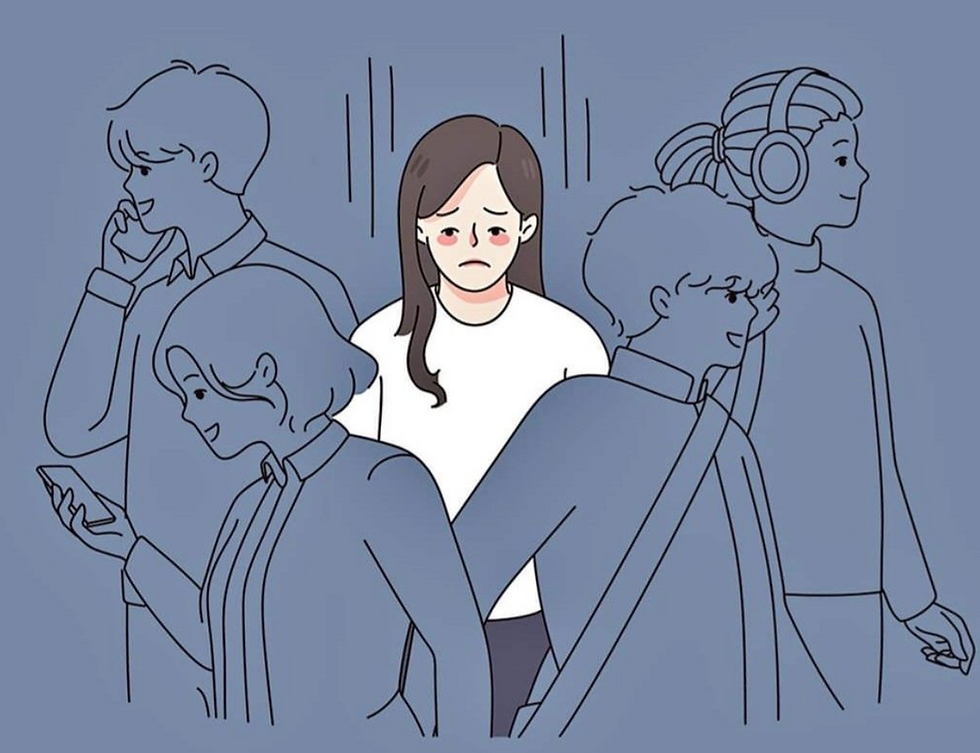
Empathy is often considered a spontaneous act: “I see an emotion, I feel it”.
Yet, this process is much more complex than it appears. Although mirror neurons facilitate immediate understanding of the actions and expressions of others, they are not sufficient to generate a true empathic experience (Rizzolatti & Sinigaglia, 2006). Empathy indeed requires a set of cognitive, affective, and relational functions that develop over time and through our interpersonal history (Siegel, 2012).
In recent decades, neuroscience has made a significant contribution to understanding the mechanisms underlying human connection. The mirror neuron system, discovered by a group of researchers in Parma in the years ’90, has been accepted as a potential “bridge” between observed actions and perceived emotions (Rizzolatti et al., 1996). However, identifying a movement or expression does not automatically imply the ability to enter the emotional state of the other.
In this article, we'll explore why observing an emotion isn't enough to truly feel it, analyzing the contributions of mirror neurons, the multifactorial nature of empathy, and the crucial role of emotional regulation and attachment relationships. Finally, we will reflect on the complexity of empathy in the clinical setting and how this skill can be cultivated.
What mirror neurons are and what they really do
Mirror neurons are nerve cells that fire both when we perform an action and when we observe someone else performing it. This feature suggests that the human brain has an implicit simulation mechanism through which the observation of a facial movement or expression causes the activation of the same brain areas involved in the direct experience of that action or emotion. This activation generates an internal response similar to that which would occur acting in the first person and consequently allows us to understand the intentions of others (Rizzolatti & Sinigaglia, 2006).
However, the response of mirror neurons is rapid and automatic and does not in itself involve complex emotional processing. Their activation determines a form of immediate and pre-reflective “resonance”, which allows the recognition of the state of others, but not necessarily full affective participation (Welsh, 2001).
It is important to consider that mirror neurons contribute to the understanding of observed actions and emotions, but work synergistically with other brain areas involved in theory of mind, affective assessment, and emotional regulation. Neural simulation, therefore, does not coincide with empathy, but constitutes a possible basis or first level of access (Decety & Jackson, 2004).
Empathy: a complex and multilevel process
Empathy cannot be reduced to a simple internal imitation of an emotional state, but constitutes a complex process that includes cognitive, affective, and motivational components. Through these components, the individual is able to understand the experience of the other, to resonate with his internal state and, in some cases, to respond actively and prosocially (Bloom, 2016). Each of these dimensions is based on specific brain functions and psychological skills that develop progressively over the course of life. It is possible to distinguish five types of empathy, which differ based on the ways in which we understand, feel, and respond to the emotional states of others.
Cognitive empathy is about the ability to understand the emotions, thoughts, and point of view of others without necessarily having to experience them firsthand. It allows, for example, to recognize the reasons for the anger or suffering of others while maintaining a distinction between self and other, and is mainly associated with the prefrontal cortex and mentalization circuits.
Emotional and affective empathy, on the other hand, imply a more direct participation in the state of the other. In the case of emotional empathy, observing an emotion, such as crying or sadness, generates a shared affective response, accompanied by a bodily resonance. Affective empathy further expands this process, allowing us to experience emotions such as joy, pain, or enthusiasm together with others. Such forms of empathy involve structures such as the anterior insula and limbic system, responsible for affective processing (Decety & Lamm, 2006).
Alongside these dimensions, there is somatic empathy, which manifests itself through automatic physical reactions, such as chills or bodily tension, in response to the experience observed in the other. This form of body resonance represents an immediate and pre-reflective response to the states of others.
Finally, compassionate empathy constitutes a more complex level of the empathic process, in which cognitive understanding and affective participation translate into motivation to act. In this case, the individual not only understands and feels the state of the other, but also manifests the desire to alleviate their suffering through caring and supportive behaviors (Singer & Klimecki, 2014).
Why Observation Is Not Enough: The Role of Emotional Regulation
Observing an emotion and “feeling it inside” requires the ability to stay present without being overwhelmed by it. For this reason, emotional regulation represents a crucial element in the empathic experience: without adequate management of one's emotions, the encounter with the emotional state of others can turn into a source of internal disorganization or emotional overload (Schore, 2012). This ability to self-regulate is not only based on biological factors, but is also profoundly influenced by early relational experiences and cultural patterns.
Personal history, made up of experiences, relationships, and attachment patterns, is the very foundation on which all these components are rooted. Each of us learns to feel and express emotions based on how we were received in childhood: growing up in an emotionally welcoming environment fosters the natural development of emotional sensitivity, creating what we might call our own “affective grammar”. In particular, primary relationships represent the first emotional school, profoundly influencing the ability to recognize, understand and regulate one's own emotional states, as well as those of others (Schore & Schore, 2008). Conversely, early experiences of neglect, trauma, or dysregulation can impair the ability to connect emotionally with others, limiting the quality and depth of empathic responses.
Alongside these aspects, biology and individual temperament contribute significantly to emotional regulation. Some people are more emotionally responsive from birth. In particular, individuals with a particularly sensitive nervous system, or with a narrow window of emotional tolerance, may perceive the emotions of others in an amplified way, resulting in hyperengagement responses or defensive mechanisms of closure and detachment (Siegel, 2020). It is important to emphasize that this predisposition should not be considered a defect, but a natural characteristic that influences the way one experiences and regulates emotions.
Conclusion
Empathy is therefore configured as a complex and multilevel process that goes far beyond the simple activation of mirror neurons. While the latter facilitate the immediate simulation of others' actions and emotions, it is the ability to integrate this resonance with cognitive, affective, and regulatory functions that allows for true emotional understanding and sharing.
Emotional regulation, shaped by our personal history, attachment relationships, and individual temperament, is the cornerstone that allows us to manage encounters with other people's emotions without being overwhelmed by them. Only in this way can empathy translate into an authentic and responsive connection, capable of fostering deep and meaningful human relationships. Cultivating this complex skill is therefore essential, not only to improve the quality of our relationships, but also to promote personal and social well-being.
Bibliographic References
Bloom, P. (2016). Against empathy: The case for rational compassion. HarperCollins.
Decety, J., & Jackson, P. L. (2004). The functional architecture of human empathy. Behavioral and Cognitive Neuroscience Reviews, 3(2), 71–100.
Decety, J., & Lamm, C. (2006). Human empathy through the lens of social neuroscience. The Scientific World Journal, 6, 1146–1163.
Figley, C. R. (2012). Compassion fatigue: Psychotherapists’ chronic lack of self care. Journal of Clinical Psychology, 58(11), 1433–1441.
Gallese, V. (2001). The “shared manifold” hypothesis: From mirror neurons to empathy. Journal of Consciousness Studies, 8(5–7), 33–50.
Rizzolatti, G., Fadiga, L., Gallese, V., & Fogassi, L. (1996). Premotor cortex and the recognition of motor actions. Cognitive Brain Research, 3(2), 131–141.
Rizzolatti, G., & Sinigaglia, C. (2006). So quel che fai. Il cervello che agisce e i neuroni specchio. Raffaello Cortina.
Rogers, C. R. (1957). The necessary and sufficient conditions of therapeutic personality change. Journal of Consulting Psychology, 21(2), 95–103.
Schore, A. N. (2012). The science of the art of psychotherapy. W. W. Norton.
Schore, A. N., & Schore, J. R. (2008). Modern attachment theory: The central role of affect regulation in development and treatment. Clinical Social Work Journal, 36(1), 9–20.
Siegel, D. J. (2012). The developing mind. Guilford Press.
Siegel, D. J. (2020). The power of showing up. Ballantine Books.
Singer, T., & Klimecki, O. M. (2014). Empathy and compassion. Current Biology, 24(18), R875–R878.


Comments