


Pathological Addictions: A Psychodynamic Perspective
- 5 days ago
- 6 min read

Article written in collaboration with @mariadalpratogrosu.psicologa
Pathological addictions are often understood, in common sense terms, as a matter of willpower or as a simple pursuit of pleasure for its own sake. Psychodynamic literature instead proposes a different interpretive key: the substance (or behavior) should not be understood only for its effects, but for the function it comes to serve in the person's psychic life.
Beyond Pleasure: The Substance as an Emotional Regulator
As early as the 1970s, some psychoanalytic authors had observed that, in many patients with addiction, substance use was not primarily oriented toward hedonistic pursuit, but toward managing painful affective states that could not otherwise be tolerated (Wurmser, 1974). This clinical observation paved the way for one of the most influential models in this field: the self-medication hypothesis.
According to Khantzian (1997), people with pathological addiction do not choose their substance at random, but tend to select the one that best "responds" to their predominant affective state: opioids to soothe anger and aggression, stimulants to counter states of emptiness and depression, alcohol to ease hyperarousal and affective isolation. In this perspective, the substance is not an external enemy that strikes at random, but a tool — however dysfunctional and dangerous — chosen (even unconsciously) to cope with a specific suffering (Khantzian, 1985).
The Deficit in Affect Regulation
A central contribution in this field concerns the concept of alexithymia, that is, the difficulty in identifying, differentiating, and verbalizing one's own emotions. Krystal (1988) described how, in many individuals with addiction, affects tend to be experienced in an undifferentiated, almost somatic form — more similar to a wave of physiological arousal than to a recognizable, thinkable emotion. When the emotional experience cannot be mentally represented, the substance offers a shortcut: acting on the body to modify an inner state that cannot be processed psychically.
This reading connects closely to the concept of mentalization, that is, the capacity to understand behavior — one's own and others' — in terms of mental states (thoughts, emotions, desires, intentions). Fonagy, Gergely, Jurist, and Target (2002) showed how this capacity develops within early attachment relationships: it is through the repeated experience of being "thought about" by a sensitive caregiver that the child progressively learns to recognize and regulate their own internal states. When this relational process has been fragile, discontinuous, or traumatic, the person may reach adulthood with a limited capacity for affect self-regulation, particularly vulnerable in the face of intense emotions.
Attachment and Vulnerability
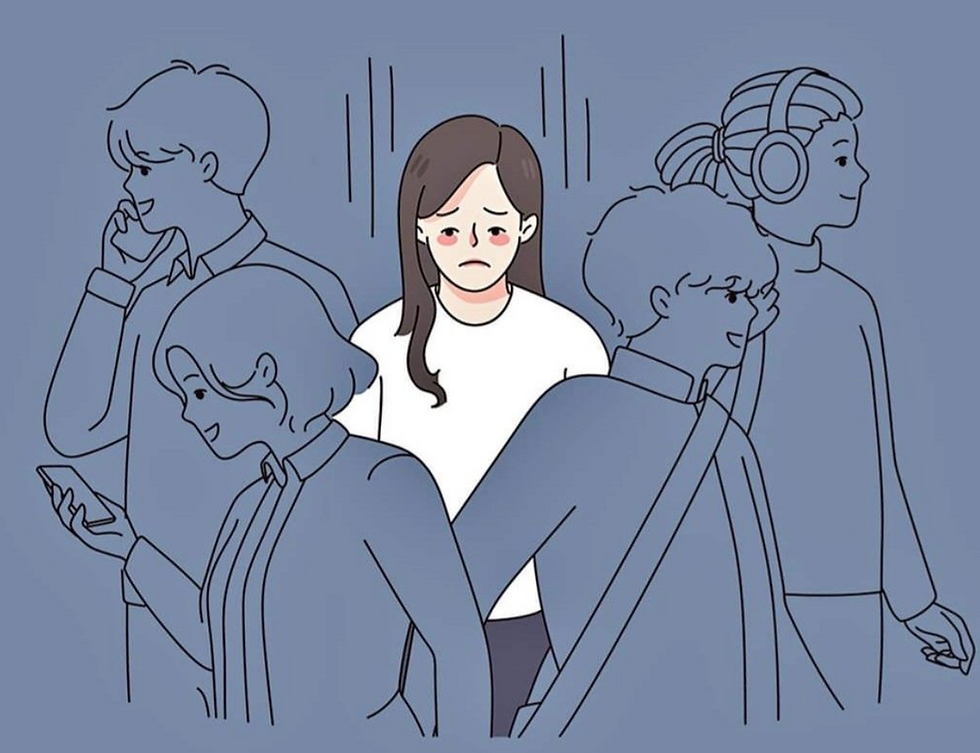
Bowlby's (1969) attachment theory provides a useful framework for understanding this vulnerability. Early relationships build not only affective bonds, but a genuine "system" through which the child learns to regulate states of alarm, anxiety, and need together with another person. When this shared regulatory function has not been able to develop in a sufficiently stable way, the individual may later find themselves, without internal tools to manage alone experiences such as separation, loss, or loneliness — experiences that, according to various psychodynamic formulations, are central to the genesis and maintenance of pathological addiction. Flores (2004) proposed reading addiction itself as an attachment disorder, in which the substance comes to occupy a missing relational space.
From this standpoint, the substance can come to occupy a psychic space that, within the primary relationship, was not able to fully develop: that of containment and the reflective function of the other (Fonagy et al., 2002). It is not surprising, then, that some authors have described the object of addiction as a kind of relationship "substitute," capable of offering — in an illusory and temporary way — a sense of relief and presence that the human relationship failed to reliably provide.
Kohut's Contribution and the Vulnerability of the Self
A psychodynamic line complementary to Khantzian's comes from Kohut's (1971, 1977) self psychology. In this perspective, addiction concerns not only the regulation of a painful emotion, but the fragility of the very structure of the Self. When early relationships did not provide adequate "mirroring" — the sense of being seen, validated, and held by another — the person's sense of identity may remain unstable, exposed to experiences of fragmentation, emptiness, and lack of internal cohesion (Kohut, 1977). In these cases, the substance (or the compulsive behavior) can function as a true "selfobject substitute": something that, from the outside, temporarily holds together a Self that would otherwise risk falling apart (Kohut, 1971).
This adds an important nuance to the self-medication model (Khantzian, 1997): it is not only about soothing a specific emotion, but at times about maintaining a minimum of psychic cohesion.
Defenses: Denial, Splitting, Acting Out
At the level of defense mechanisms, psychodynamic literature has repeatedly described three central elements in the functioning of people with addiction. Vaillant (1992) places denial among the most primitive defense mechanisms: it should not be read moralistically as "lying," but as a genuine inability to recognize the extent of the problem, often because acknowledging it would open onto unbearable psychic suffering.
Splitting, described by Kernberg (1975) as a mechanism typical of more fragile personality organizations, involves difficulty holding together positive and negative aspects of the self and others, leading to oscillations between idealization and devaluation — frequent in the therapeutic relationship as well.
Finally, acting out is understood as the tendency to discharge into action — taking the substance, enacting the behavior — what cannot be mentally processed (Wurmser, 1974). When an emotional experience is too intense, the substance thus offers an apparent alternative to thinking and feeling: a (momentary) way of distancing oneself from reality and suffering.
Trauma and Dissociation
A line of thought that developed in parallel concerns the link between addiction and trauma. Krystal (1988) observed that, in many clinical histories, resorting to a substance does not regulate only generic anxiety, but specifically dissociative states linked to prior traumatic experiences. Van der Kolk (2014) further developed this theme, describing how trauma impairs the individual's capacity to process experience at a symbolic level, leaving action on the body as the only available discharge route.
The substance, in this sense, can take on a paradoxical dual function: at times it "reactivates" a minimum of sensation in someone who feels chronically numb, at other times it "shuts down" an otherwise unbearable hyperarousal (Khantzian & Albanese, 2008). This explains why very different substances (stimulants vs. sedatives) may be chosen by patients with similar traumatic histories, depending on which dysregulated state predominates.
Clinical Implications
If one accepts this reading, the therapeutic approach also changes radically. Treatment focused exclusively on abstinence from the substance risks leaving the underlying vulnerability intact, depriving the person of a regulatory tool — however dysfunctional — without offering an alternative one. Psychodynamic work instead aims to build, together with the patient, new capacities to recognize, represent, and tolerate emotional states, so that what was previously acted out through the substance can progressively become thinkable and processable within the therapeutic relationship.
The therapist often becomes the first stable "container" the person experiences, and precisely for this reason the therapeutic relationship tends to reproduce — in the transference — the same insecure attachment dynamics that contributed to the original vulnerability (Flores, 2004). Managing oscillations, ruptures in the therapeutic alliance, and moments of splitting is an integral part of treatment, not an obstacle to it.
From this perspective, the most clinically useful question is not "why can't this person stop?" but rather "what psychic function is this substance serving for this person, at this point in their life?". This is a question that shifts attention from symptom to meaning, and that opens the way to a deeper, genuinely transformative intervention.
A Note of Balance
It is worth remembering, for the sake of scientific honesty, that the psychodynamic model is one of several perspectives on addiction, not the only one: biological models (neuroadaptation, genetics, reward circuits) and social/environmental ones offer equally necessary readings, and in more up-to-date clinical practice they tend to be integrated rather than pitted against one another.
References
Bowlby, J. (1969). Attachment and loss: Vol. 1. Attachment. Basic Books.
Flores, P. J. (2004). Addiction as an attachment disorder. Jason Aronson.
Fonagy, P., Gergely, G., Jurist, E. L., & Target, M. (2002). Affect regulation, mentalization, and the development of the self. Other Press.
Kernberg, O. F. (1975). Borderline conditions and pathological narcissism. Jason Aronson.
Khantzian, E. J. (1985). The self-medication hypothesis of addictive disorders: Focus on heroin and cocaine dependence. American Journal of Psychiatry, 142(11), 1259–1264.
Khantzian, E. J. (1997). The self-medication hypothesis of substance use disorders: A reconsideration and recent applications. Harvard Review of Psychiatry, 4(5), 231–244.
Khantzian, E. J., & Albanese, M. J. (2008). Understanding addiction as self medication: Finding hope behind the pain. Rowman & Littlefield.
Kohut, H. (1971). The analysis of the self. International Universities Press.
Kohut, H. (1977). The restoration of the self. International Universities Press.
Krystal, H. (1988). Integration and self-healing: Affect, trauma, alexithymia. Analytic Press.
Vaillant, G. E. (1992). Ego mechanisms of defense: A guide for clinicians and researchers. American Psychiatric Press.
Van der Kolk, B. A. (2014). The body keeps the score: Brain, mind, and body in the healing of trauma. Viking.
Wurmser, L. (1974). Psychoanalytic considerations of the etiology of compulsive drug use. Journal of the American Psychoanalytic Association, 22(4), 820–843.


Comments