


Paraphilia and Paraphilic Disorder: Understanding Atypical Sexuality Beyond Prejudice
- Aug 26
- 7 min read

Article written in collaboration with @psy.giusybua
Human sexuality expresses itself along a spectrum far broader than common culture tends to acknowledge. Within clinical practice, the topic of paraphilias remains one of the most delicate to address, suspended between the need to depathologize atypical sexuality and the need to identify, when present, forms of distress or risk that require intervention. This article offers an overview of the topic, distinguishing the concept of paraphilia from the clinically narrower concept of Paraphilic Disorder.
From "Perversion" to "Paraphilia": A Shift in Perspective
Until the late 1970s, psychiatric language used the term "perversion" to describe atypical sexual interests, an expression that carried an implicit moralistic connotation. With the publication of the DSM-III in 1980, the American Psychiatric Association replaced this term with "paraphilia," from the Greek para (beside, beyond) and philia (love, attraction), in an attempt to adopt a more descriptive and less judgmental language.
The DSM-5, and subsequently the DSM-5-TR, introduced a further conceptual distinction considered crucial by the work group that curated the chapter: that between paraphilia and Paraphilic Disorder. As emphasized by the chair of the relevant sub-work group, the distinction acknowledges that many people live out atypical sexual interests without this entailing any form of pathology (American Psychiatric Association [APA], 2022; First, 2014).
What Is a Paraphilia, Clinically Speaking
A paraphilia is defined as an intense and persistent sexual interest other than one oriented toward genital stimulation or preliminary caressing with consenting adult human partners (First, 2014). It is, therefore, an arousal pattern that departs from what a given culture, at a given historical moment, considers "typical" — a definition the DSM-5 deliberately left open, without anchoring it to a rigid list of normal behaviors (First, 2014).
This definitional openness matters: it means that atypicality, in itself, is not equated with pathology. A person may hold an unusual sexual interest — in an object, a body part, a power dynamic, a specific situation — and live out this interest in an integrated, untroubled, conflict-free way.
When Paraphilia Becomes a Disorder
The shift from paraphilia to Paraphilic Disorder occurs through two possible pathways, often referred to as the "two routes" of clinical judgment (APA, 2022; First, 2014):
The route of personal distress: the paraphilia generates clinically significant distress in the person, anxiety, shame, isolation, or an impairment of functioning in social, occupational, or relational domains.
The route of harm to others: satisfying the paraphilia inherently involves psychological or physical harm, or a concrete risk, to other people, typically because it involves the participation of non-consenting individuals.
This second route applies in particular to the paraphilias the DSM-5-TR defines as "oriented toward a non-consenting other," such as frotteuristic disorder, voyeuristic disorder, exhibitionism, or pedophilic disorder: for these categories, a diagnosis can be made even in the absence of subjective distress reported by the person, precisely because the behavior itself carries a potential for harm to others (APA, 2022).
By contrast, for paraphilias such as fetishism, sexual masochism, or transvestism, diagnosis requires the presence of clinically significant distress or functional impairment: if the person lives out their sexuality consensually and without distress, the diagnostic criterion is not met (APA, 2022).
The Question of Consent
Consent thus emerges as one of the most relevant criteria for guiding clinical assessment. Various practices linked to atypical sexual interests — from fetishism to BDSM, from roleplay to transvestism — are enacted between consenting adults, with full mutual awareness and without any resulting distress. In such cases, according to the DSM-5-TR framework, the paraphilia does not constitute a disorder (APA, 2022).
The question of consent has been the subject of extensive debate in the sexological literature, which has increasingly highlighted how the clinical stigmatization of unconventional but consensual practices can produce iatrogenic harm, fueling shame and isolation in people who present no genuine pathological condition (First, 2014).
Why Paraphilias Develop: A Multifactorial Picture
Clinical research does not identify a single cause underlying the development of a paraphilic interest. The most credited etiological hypotheses point to an interplay of early experiences, associative conditioning processes linking stimuli to sexual arousal, neurobiological factors, and individual psychological and relational dynamics (First, 2014; Quattrini, 2011). This multifactoriality calls for caution against simplistic readings that reduce a paraphilia to a single traumatic or educational cause, as well as against blame-oriented narratives directed at the person.
A Look at the Data
Epidemiological estimates for paraphilias remain approximate, hindered by the methodological difficulty of measuring phenomena that often involve undisclosed behaviors. Recent estimates indicate, for example, a maximum possible lifetime prevalence of around 12% for men and 4% for women with respect to voyeuristic disorder, while frotteuristic behaviors are reported by as many as 30% of adult men in the general population (APA, 2022). These figures, while to be interpreted cautiously, paint the picture of an atypical sexuality far more widespread than common sense tends to assume.
The Eight DSM-5-TR Categories
The DSM-5-TR identifies eight specific Paraphilic Disorders, organized into two groups (APA, 2022; First, 2014):
Paraphilias oriented toward anomalous activity:
Voyeuristic disorder: recurrent, intense arousal from observing an unsuspecting person who is naked, undressing, or engaged in sexual activity.
Exhibitionistic disorder: arousal linked to exposing one's genitals to an unsuspecting person.
Frotteuristic disorder: arousal derived from touching or rubbing against a non-consenting person.
Sexual masochism disorder: arousal associated with being humiliated, beaten, bound, or otherwise made to suffer.
Sexual sadism disorder: arousal associated with inflicting physical or psychological suffering on another person.
Paraphilias oriented toward an anomalous target:
Pedophilic disorder: recurrent sexual interest in prepubescent children.
Fetishistic disorder: arousal linked to inanimate objects or a specific non-genital body part.
Transvestic disorder: arousal associated with cross-dressing.
Two residual categories are added — Other Specified Paraphilic Disorder and Unspecified Paraphilic Disorder — used when the clinical picture does not fully fit one of the eight preceding categories, while still presenting the general features of a disorder (APA, 2022).
It is important to note that this classification does not exhaust the variety of existing paraphilias: dozens of atypical sexual interests are described in the literature (for example podophilia, autogynephilia, or formicophilia) that fall outside the eight named categories and that, unless they generate distress or harm, do not constitute a disorder (First, 2014).
The Clinical Assessment Process
Assessing a possible paraphilia requires a multidimensional approach, typically including a thorough sexual history, exploration of the person's life and relational history, and careful inquiry into the level of subjective distress, psychosocial functioning, and any behaviors enacted toward others. In forensic contexts, assessment may also draw on specific psychometric instruments and, in some cases, psychophysiological measures of sexual arousal, although their use remains scientifically and diagnostically controversial (First, 2014).
A central element, often underestimated, concerns the need to accurately distinguish between behavior and disorder: the mere presence of a sexually atypical behavior, or even a sexually unlawful behavior, does not automatically equate to the presence of a clinically significant deviant arousal pattern — a diagnostic error the DSM-5 explicitly sought to correct relative to previous editions (First, 2014).
Therapeutic Approaches
Treatment for Paraphilic Disorders is generally organized on two levels, often integrated: psychotherapeutic intervention and, in more severe cases, pharmacological intervention.
On the psychotherapeutic side, cognitive-behavioral therapy (CBT) represents the approach with the strongest evidence of efficacy, working on restructuring the cognitive distortions associated with the problematic behavior, developing relapse-prevention strategies, and, in forensic contexts, reducing the risk of reoffending (Culos et al., 2024).
On the pharmacological side, selective serotonin reuptake inhibitors (SSRIs) are used mainly in milder forms, acting on the obsessive-compulsive component often associated with paraphilia, while antiandrogen treatments and GnRH analogs — which lower testosterone levels — are reserved for the most severe cases, particularly in forensic settings, where the primary goal is reducing the risk of harmful behavior toward others (Culos et al., 2024). It should be noted that the scientific literature on these pharmacological treatments remains qualitatively limited, based mostly on observational studies or case reports, which calls for cautious and closely monitored use of these protocols (Culos et al., 2024).
It is worth reiterating that, in most non-forensic cases, the goal of treatment is not to "eliminate" the paraphilic interest itself, but rather to reduce the associated distress and, where relevant, the risk of harmful behavior.
The Pathologization Debate
Over the past twenty years, a lively debate has developed within the scientific community regarding the very appropriateness of retaining some consensual paraphilias within diagnostic systems. Some authors have argued that the inclusion of practices such as fetishism, masochism, or sexual sadism in diagnostic manuals — even merely as a potential category — contributes to pathologizing forms of sexuality that cause no harm when lived out knowingly and consensually between adults, fueling discrimination in legal, occupational, and parenting contexts (Moser & Kleinplatz, 2005).
This line of research has led to the development of clinical guidelines oriented toward "kink-aware" practice, aimed at training mental health professionals to recognize their own implicit biases and to avoid automatically conflating unconventional sexual practices with pathology or risk, instead carefully distinguishing between consensual dynamics and situations of genuine abuse (Sprott & Berkey, 2023). Research has indeed documented that people involved in kink or BDSM practices hesitate to seek help from a professional, fearing judgment or that their sexuality will improperly become the focus of treatment, at the expense of the actual reason for seeking help (Sprott & Berkey, 2023).
This debate calls on clinicians to engage in an ongoing exercise of awareness: recognizing the difference between the atypicality of a sexual interest and its actual dangerousness or pathology is, ultimately, the central clinical exercise around which the entire diagnostic framework of Paraphilic Disorders revolves.
Implications for Clinical Practice
For those working in psychology, the distinction between paraphilia and Paraphilic Disorder has direct implications for practice. A clinical intervention should not aim to "correct" the person's sexual orientation or interest, but rather to:
understand the origin and subjective meaning of the paraphilic interest within the person's life history;
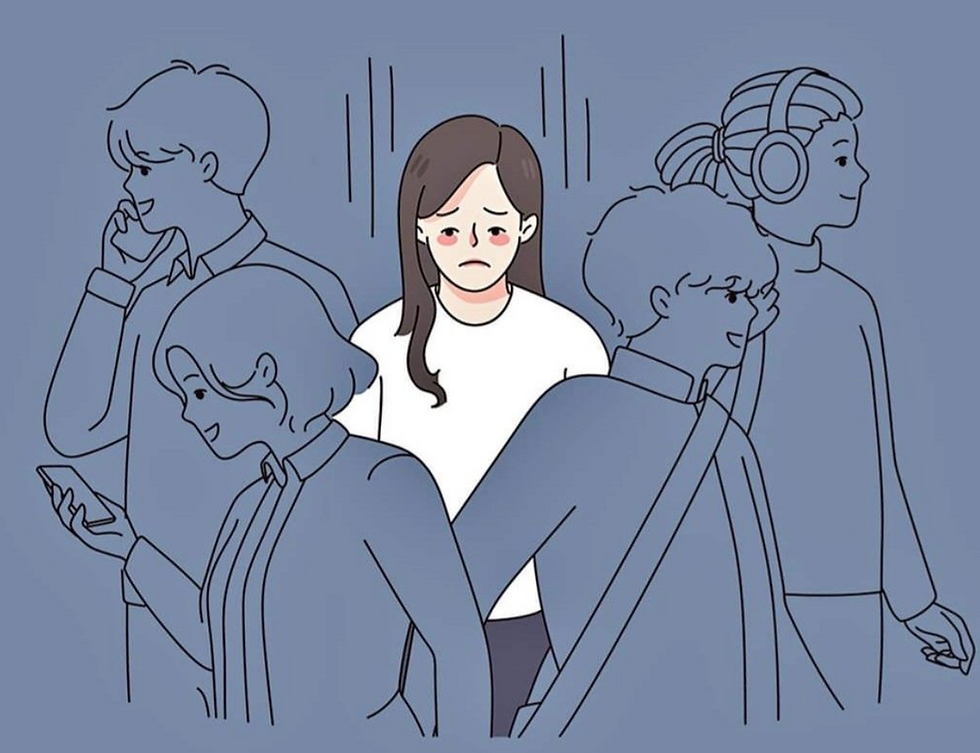
address any distress, shame, or isolation present;
assess, when necessary, the presence of risks to the safety of others and intervene accordingly;
support the integration of atypical sexuality into a satisfying relational and emotional life, when this causes no harm to anyone.
Conclusions
The distinction between paraphilia and Paraphilic Disorder represents an important step in moving beyond a moralistic view of sexuality, in favor of a clinical approach grounded in narrower criteria: subjective distress and the risk of harm to others. Recognizing that atypical sexuality, in itself, is not equivalent to pathology makes it possible to direct psychological intervention toward those who genuinely need it, while reducing stigma toward those who live out their sexuality knowingly, consensually, and without conflict.
References
American Psychiatric Association. (2022). Diagnostic and statistical manual of mental disorders (5th ed., text rev.). https://doi.org/10.1176/appi.books.9780890425787
Bader, M. J. (2002). Arousal: The secret logic of sexual fantasy. St. Martin's Press.
Culos, C., Di Grazia, M., & Meneguzzo, P. (2024). Pharmacological interventions in paraphilic disorders: Systematic review and insights. Journal of Clinical Medicine, 13(6), 1524. https://doi.org/10.3390/jcm13061524
First, M. B. (2014). DSM-5 and paraphilic disorders. Journal of the American Academy of Psychiatry and the Law, 42(2), 191–201.
Moser, C., & Kleinplatz, P. J. (2005). DSM-IV-TR and the paraphilias: An argument for removal. Journal of Psychology & Human Sexuality, 17(3–4), 91–109. https://doi.org/10.1300/J056v17n03_05
Quattrini, F. (2011). Parafilie e devianza: Clinica e psicopatologia [Paraphilias and deviance: Clinical practice and psychopathology]. FrancoAngeli.
Sprott, R. A., & Berkey, N. (2023). Clinical guidelines for working with clients involved in kink. Journal of Sex & Marital Therapy, 49(8), 903–918. https://doi.org/10.1080/0092623X.2023.2232801


Comments