


Orthorexia: When "Healthy" Food Becomes a Cage
- Aug 5
- 4 min read

Article written in collaboration with @dott.ssa_giuliagiulivi
In recent years, the theme of "clean" eating has gained increasing space across social media, wellness influencers, and a growing cultural focus on what we eat. Within this context, orthorexia nervosa has emerged — a term first coined by physician Steven Bratman in 1997 to describe people whose extreme diets, intended for health reasons, paradoxically end up causing malnutrition or impairing daily functioning (Bratman, 1997, as cited in Koven & Abry, 2015).
A Disorder Still Without a Shared Definition
Despite growing research interest, orthorexia still lacks a univocal definition or officially recognized diagnostic criteria. A literature review conducted by Cena et al. (2019) found that, even in the absence of consensus, the available studies converge on three recurring elements: an obsessive and pathological preoccupation with healthy eating, emotional consequences such as anxiety and distress when self-imposed dietary rules are not followed, and significant psychosocial impairment, often accompanied by malnutrition or weight loss.
This lack of shared diagnostic criteria is not a minor detail: it makes the disorder harder to diagnose, complicates the development of reliable assessment tools, and consequently limits access to targeted treatment (Horovitz & Argyrides, 2023). The most widely used psychometric instruments in clinical and research settings, such as the ORTO-15 and Bratman's Orthorexia Self-Test, remain only partial and insufficient to capture the full complexity of the phenomenon (Cena et al., 2019).
How Widespread Is It?
Prevalence data on orthorexia should be interpreted with caution, precisely because of the lack of universally validated diagnostic tools. A meta-analysis involving more than 30,000 people across 18 countries estimated, using the ORTO-15 questionnaire, that around 27.5% of participants showed symptoms consistent with orthorexia, with higher rates among athletes and people engaged in intense physical activity (López-Gil et al., 2023). The same authors note, however, that this percentage has increased over time and should be interpreted with caution, since the ORTO-15 questionnaire has been criticized for its weak psychometric validity (López-Gil et al., 2024). Other studies using different tools, such as the Düsseldorf Orthorexia Scale, report much lower prevalence rates, around 1–2% (Rodríguez-Rodríguez et al., 2025). This wide gap reflects just how much the field is still evolving.
Who Is Most at Risk?
Research has identified several factors associated with a higher risk of developing orthorexic behaviors. These include personality traits such as perfectionism, excessive focus on physical appearance, preoccupation with body weight, insecure attachment styles, and a personal history of eating disorders (López-Gil et al., 2023). Family context also plays a role: rigid eating habits learned during childhood or a parental history of eating disorders appear to increase vulnerability (Rodríguez-Rodríguez et al., 2025). Particularly exposed populations include athletes, health and nutrition professionals, and university students — often navigating a life stage in which identity and eating habits are still forming (Horovitz & Argyrides, 2023).
How Does It Differ From Anorexia and Obsessive-Compulsive Disorder?
Although it shares some features with other clinical conditions, orthorexia is distinguished by specific elements. Unlike anorexia nervosa, which is primarily driven by the desire to lose weight and a fear of gaining weight, orthorexia is driven by an obsession with the quality and purity of food rather than its quantity (Horovitz & Argyrides, 2023). At the same time, the rigidity of the rules and the intrusive nature of food-related thoughts bring orthorexia closer to obsessive-compulsive disorder, although the two conditions remain clinically distinct (Horovitz & Argyrides, 2023).
Intervention Is Possible
Even in the absence of specific, validated treatment guidelines, the approaches most commonly used in clinical practice draw on treatments already applied to other eating disorders — particularly cognitive-behavioral therapy, which works on loosening rigid dietary rules and managing food-related anxiety (Horovitz & Argyrides, 2023). Effective intervention often involves integrated work between a psychologist and a nutritionist, addressing both the obsessive psychological dimension and any nutritional imbalances (McGregor, 2017). Even here, though, the lack of standardized protocols remains one of the main open challenges for research and clinical practice.
Why It Remains Invisible
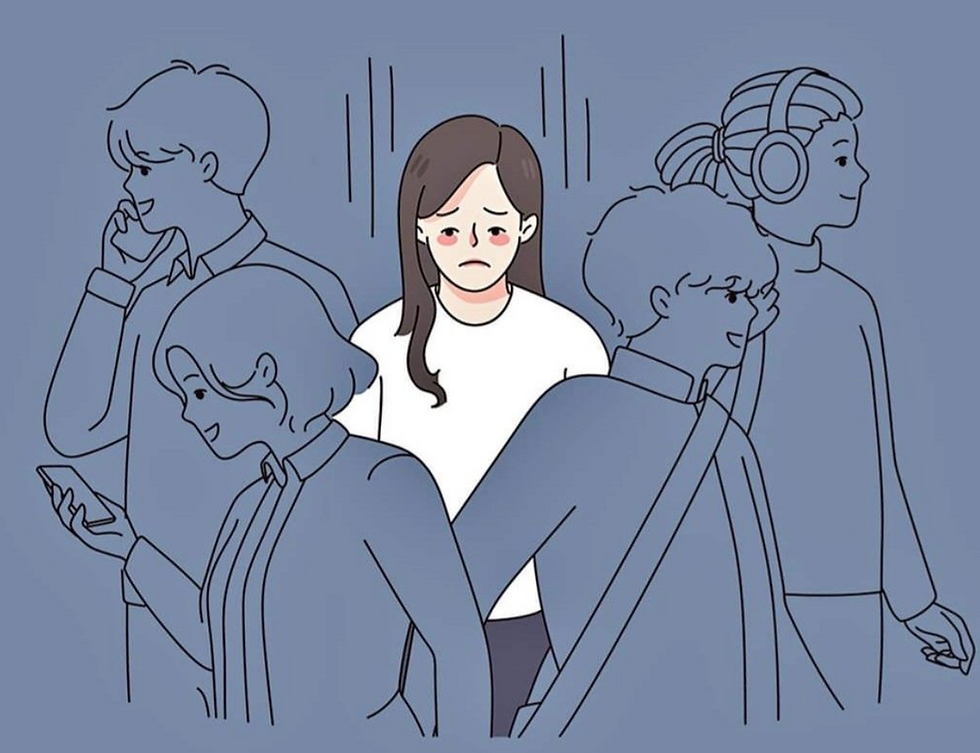
One of the most insidious aspects of orthorexia is its social invisibility. McGregor (2017) observes that people affected by it are often praised for their discipline, receiving positive reinforcement from those around them precisely as their eating behavior becomes more rigid and restrictive. This mechanism of social approval helps mask the disorder, delaying help-seeking. The cost of this invisibility, however, is real: nutritional deficiencies, chronic fatigue, intrusive thoughts that occupy much of the day, and progressive social isolation (Kalra et al., 2020).
Recovery Is Possible
Precisely because orthorexia is not yet formally recognized as a standalone diagnosis, talking about it openly is a crucial step toward earlier recognition. A course of psychological support, often combined with specialized nutritional counseling, can help people rebuild a more flexible and peaceful relationship with food — without giving up the desire to care for themselves.
References (APA 7)
Brytek-Matera, A. (2021). Vegetarian diet and orthorexia nervosa: A review of the literature. Eating and Weight Disorders, 26(1), 1–11. https://doi.org/10.1007/s40519-019-00816-3
Cena, H., Barthels, F., Cuzzolaro, M., Bratman, S., Brytek-Matera, A., Dunn, T., Varga, M., Missbach, B., Donini, L. M., Fairburn, C. G., & Dell'Osso, L. (2019). Definition and diagnostic criteria for orthorexia nervosa: A narrative review of the literature. Eating and Weight Disorders, 24(2), 209–246. https://doi.org/10.1007/s40519-018-0606-y
Horovitz, O., & Argyrides, M. (2023). Orthorexia and orthorexia nervosa: A comprehensive examination of prevalence, risk factors, diagnosis, and treatment. Nutrients, 15(17), 3851. https://doi.org/10.3390/nu15173851
Kalra, S., Kapoor, N., & Jacob, J. (2020). Orthorexia nervosa. Journal of the Pakistan Medical Association, 70(7), 1282–1284.
Koven, N. S., & Abry, A. W. (2015). On orthorexia nervosa: A review of the literature and proposed diagnostic criteria. Neuropsychiatric Disease and Treatment, 11, 385–394.
López-Gil, J. F., Tárraga-López, P. J., Hershey, M. S., López-Bueno, R., Gutiérrez-Espinoza, H., Soler-Marín, A., Fernández-Montero, A., & Victoria-Montesinos, D. (2023). Overall proportion of orthorexia nervosa symptoms: A systematic review and meta-analysis including 30,476 individuals from 18 countries. Journal of Global Health, 13, 04087. https://doi.org/10.7189/jogh.13.04087
López-Gil, J. F., et al. (2024). Orthorexia nervosa: Why research based on imperfect measures may still be useful. Journal of Global Health, 14, 03053.
McGregor, R. (2017). Orthorexia: When healthy eating goes bad. Nourish.
Rodríguez-Rodríguez, E., et al. (2025). Orthorexia nervosa: Prevalence among Spanish university students and its effects on cardiometabolic health. [Published in an academic journal].


Comments