


The Development of the Human Brain: From Prenatal Beginnings to Early Adulthood
- Aug 27, 2025
- 4 min read
Updated: Aug 28, 2025
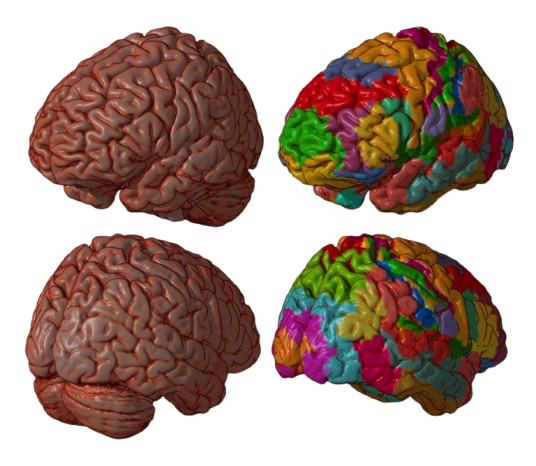
The human brain is widely regarded as one of the most intricate and dynamic structures in biology. Far from being a static organ, its development is a prolonged, carefully orchestrated process that begins before birth and continues into the mid-20s. This trajectory not only illuminates how typical cognitive and emotional functioning arises but also sheds light on the origins of psychological and neurological disorders. By tracing the stages of brain development, researchers and clinicians can better understand both resilience and vulnerability across the lifespan.
The Prenatal Stage: Building the Blueprint
Brain development begins remarkably early. Around the third week of gestation, the neural tube forms and sets the foundation for the central nervous system. Over subsequent weeks, this structure differentiates into the spinal cord and brain, initiating the processes that will define the brain’s basic architecture (Rakic, 2009).
Neurogenesis (Weeks 5–20)
During this phase, billions of neurons are produced from neural stem cells, sometimes at a staggering rate of hundreds of thousands per minute (Rakic, 2009).
Migration
Once generated, neurons migrate to their designated regions, guided by chemical gradients and molecular cues. This migration is essential for establishing the layered organization of the cortex.
Differentiation
Neurons then differentiate into specialized cell types, such as excitatory and inhibitory neurons, and begin forming early synaptic connections. Although these connections are rudimentary, they lay the groundwork for later refinement.
This prenatal period, while primarily structural, is critical. It sets the stage for the later “wiring” of functional brain circuits that will be refined through postnatal experience.
Early Postnatal Development: Wiring the Network
At birth, the human brain is only about 25% of its eventual adult size. By age three, however, it reaches nearly 80% of adult volume, reflecting extraordinary growth and connectivity (Huttenlocher & Dabholkar, 1997).
Synaptogenesis
After birth, there is an explosion of synaptic connections, particularly in sensory and motor cortices. This overproduction allows for heightened plasticity, enabling the infant brain to rapidly adapt to environmental input.
Myelination
Glial cells begin to form myelin sheaths around axons, enhancing both speed and efficiency of communication. Myelination follows a predictable trajectory, beginning in primary sensory and motor regions before spreading to higher-order areas involved in complex reasoning and executive functions (Fields, 2008).
Synaptic Pruning
As the child grows, the brain selectively eliminates redundant or unused connections in a “use it or lose it” process. This refinement enhances efficiency and is highly dependent on experience, highlighting the interaction between biology and environment.
Adolescence: Remodeling the Brain
Contrary to earlier beliefs that brain development is largely complete by childhood, adolescence is now understood as a second major period of neural reorganization.
Prefrontal Cortex Maturation
The prefrontal cortex—critical for executive functioning, decision-making, and impulse control—is one of the last regions to mature, not reaching full development until the mid-20s (Casey, Jones, & Hare, 2008).
Reward System Sensitivity
In contrast, the limbic system, including the amygdala and nucleus accumbens, develops earlier. This imbalance between an immature prefrontal cortex and a highly reactive limbic system helps explain adolescents’ heightened emotionality, sensitivity to reward, and risk-taking behaviors (Casey et al., 2008).
White Matter Growth
Adolescence also features continued myelination and strengthening of long-range connectivity. This supports better integration between brain regions, enabling more coordinated and efficient cognitive processing (Giedd et al., 1999).
Thus, adolescence represents both a window of opportunity for learning and adaptation and a period of vulnerability to psychopathology.
Early Adulthood: Stability and Refinement
By the mid-20s, most major structural maturation has been achieved. Synaptic pruning slows considerably, myelination plateaus, and the prefrontal cortex reaches full maturity. Brain networks become increasingly stable, supporting adult capacities for self-regulation, long-term planning, and complex reasoning (Kolb & Gibb, 2011).
However, neuroplasticity remains a lifelong property. While the intensity of plasticity is reduced compared to childhood and adolescence, adult brains continue to adapt in response to experience, learning, and environment.
Why Brain Development Matters for Psychology
Understanding brain development has wide-ranging implications:
Clinical Psychology: Many conditions, including autism spectrum disorder, ADHD, and schizophrenia, can be traced to atypical developmental trajectories (Giedd et al., 1999).
Education: Insights into sensitive periods inform educational practices, suggesting when certain interventions may be most effective.
Therapy and Neurorehabilitation: Knowledge of plasticity informs strategies for recovery following brain injury or trauma, offering hope for functional improvement across the lifespan (Kolb & Gibb, 2011).
Key Research Highlights in Brain Development
Neurogenesis and Prenatal Development: Rakic (2009) provides a foundational overview of how neurons are produced and organized during gestation.
Synaptogenesis and Plasticity: Huttenlocher and Dabholkar (1997) mapped synaptic density changes across the cortex, shaping the “overproduction and pruning” model.
Myelination and White Matter Growth: Fields (2008) examined how myelination underpins cognition and how disruptions contribute to psychiatric disorders.
Adolescent Brain Development: Casey et al. (2008) highlighted the developmental imbalance between prefrontal and limbic regions.
Plasticity and Lifespan Changes: Kolb and Gibb (2011) demonstrated how experience and interventions can shape the brain at every stage.
Implications for Psychopathology: Giedd et al. (1999) conducted longitudinal MRI studies showing structural changes during childhood and adolescence and their links to disorders.
Final Thoughts
Brain development is a story of growth, pruning, and adaptation. It is both genetically programmed and profoundly shaped by experience. Recognizing how the brain builds, reorganizes, and refines itself provides a foundation for understanding human behavior—and equips psychologists, educators, and healthcare professionals to better support individuals across the lifespan.
References
Casey, B. J., Jones, R. M., & Hare, T. A. (2008). The adolescent brain. Annals of the New York Academy of Sciences, 1124(1), 111–126. https://doi.org/10.1196/annals.1440.010
Fields, R. D. (2008). White matter in learning, cognition and psychiatric disorders. Trends in Neurosciences, 31(7), 361–370. https://doi.org/10.1016/j.tins.2008.04.001
Giedd, J. N., Blumenthal, J., Jeffries, N. O., Castellanos, F. X., Liu, H., Zijdenbos, A., Paus, T., Evans, A. C., & Rapoport, J. L. (1999). Brain development during childhood and adolescence: A longitudinal MRI study. Nature Neuroscience, 2(10), 861–863. https://doi.org/10.1038/13158
Huttenlocher, P. R., & Dabholkar, A. S. (1997). Regional differences in synaptogenesis in human cerebral cortex. Journal of Comparative Neurology, 387(2), 167–178. https://doi.org/10.1002/(SICI)1096-9861(19971020)387:2<167::AID-CNE1>3.0.CO;2-Z
Kolb, B., & Gibb, R. (2011). Brain plasticity and behaviour in the developing brain. Journal of the Canadian Academy of Child and Adolescent Psychiatry, 20(4), 265–276. https://www.ncbi.nlm.nih.gov/pmc/articles/PMC3222570/
Rakic, P. (2009). Evolution of the neocortex: A perspective from developmental biology. Nature Reviews Neuroscience, 10(10), 724–735. https://doi.org/10.1038/nrn2719


Comments