


Hyper-independence: when self-sufficiency becomes a defensive strategy
- May 20
- 6 min read

Article written in collaboration with @psicologa.luciacacace
Introduction
"I don't need anyone." At first glance, this statement might seem like an expression of strength, maturity, resilience. Yet when this belief becomes rigid — when asking for help causes discomfort, emotional closeness generates anxiety, and showing vulnerability feels unacceptable — we are dealing with something far more complex. The psychological literature describes this cluster of patterns with the term hyper-independence: a form of defensive self-sufficiency that, while protective in the short term, can over time increase the risk of emotional isolation, relational difficulties, and psychological suffering.
Furthermore, in many contemporary cultures, extreme self-sufficiency is valued and associated with strength, productivity, and emotional maturity. This can make it harder to recognize when independence stops being an asset and becomes a rigid defensive strategy.
What is hyper-independence?
The term hyper-independence does not correspond to an official diagnostic category in current classification systems (DSM-5-TR or ICD-11), but describes a clinically relevant pattern characterized by rigid self-sufficiency, emotional avoidance, difficulty depending on others, and relational distance. It is a constellation of strategies that psychological research links to well-documented constructs, including avoidant attachment style, emotional suppression, and dysfunctional relational detachment.
It is important to distinguish this pattern from healthy autonomy: the hyper-independent person does not choose self-sufficiency out of preference or a solid sense of self, but because dependence — understood as relying on others, asking for support, showing need — is implicitly perceived as risky, destabilizing, or humiliating.
Of course, loving autonomy or preferring moments of solitude does not necessarily imply the presence of an avoidant or dysfunctional pattern. The central difference concerns flexibility: the ability to get closer to the other without it automatically activating defenses, intense discomfort, or the need for control.
Roots in attachment theory
To understand the origin of this pattern, we must turn to attachment theory. Bowlby (1969, 1973, 1980) described how, from the first months of life, the infant develops a primary motivational system oriented toward seeking proximity and protection from the attachment figure. When this figure is available and responsive, the child internalizes an internal working model in which the other is perceived as reliable and the self as worthy of care.
When the attachment figure is emotionally unavailable, rejecting, or unpredictable, the child learns to deactivate the attachment system: minimizing the expression of need, avoiding seeking comfort, and developing an early appearance of self-sufficiency. Ainsworth et al. (1978), through the Strange Situation procedure, identified this pattern as insecure-avoidant attachment, finding that these children, despite showing apparent indifference to separation from the attachment figure, displayed significantly elevated levels of physiological arousal — a sign that the need for connection was present, but suppressed at the behavioral level.
Mikulincer and Shaver (2007) extended this research to adulthood, showing that adults with an avoidant attachment style tend to downplay the importance of intimate relationships, avoid emotional dependence, and perceive closeness as a threat to their autonomy. These individuals report a lower need for connection, yet experimental studies show that under stress, the desire for closeness emerges unconsciously — suggesting that relational detachment is an active regulatory strategy, not a structural trait.
The role of emotion regulation
One of the central features of hyper-independence is the systematic use of emotional suppression as a regulatory strategy. Gross (1998) distinguished between antecedent-focused regulation strategies — such as cognitive reappraisal — and response-focused strategies, including expressive suppression. The latter involves actively blocking the expression of emotional experience, preventing emotions from becoming visible to others.
Gross and Levenson (1997) found that emotional suppression, while reducing the behavioral expression of emotion, does not reduce physiological arousal — which in fact increases. Over time, chronic use of this strategy is associated with greater stress reactivity, increased anxiety and depressive symptoms, and lower quality interpersonal relationships, as it limits authentic emotional sharing with others.
In this sense, the hyper-independent person pays a significant cost: maintaining an image of full self-sufficiency, but at the expense of high psychological and physiological burden — often experienced as chronic fatigue, a sense of emptiness, or disconnection from oneself.
Some studies also suggest that chronic hyperactivation of emotional control systems can maintain a persistent state of physiological tension, even when the person appears fully functional or highly efficient on the outside.
Psychological and relational consequences
Research consistently shows that patterns of hyper-independence and emotional detachment are associated with negative outcomes for psychological health. Collins and Feeney (2004) documented how people with an avoidant attachment style tend to receive less social support in times of difficulty — not because it is unavailable, but because they do not actively seek it, or inadvertently signal that they do not want it, thus creating a self-fulfilling prophecy.
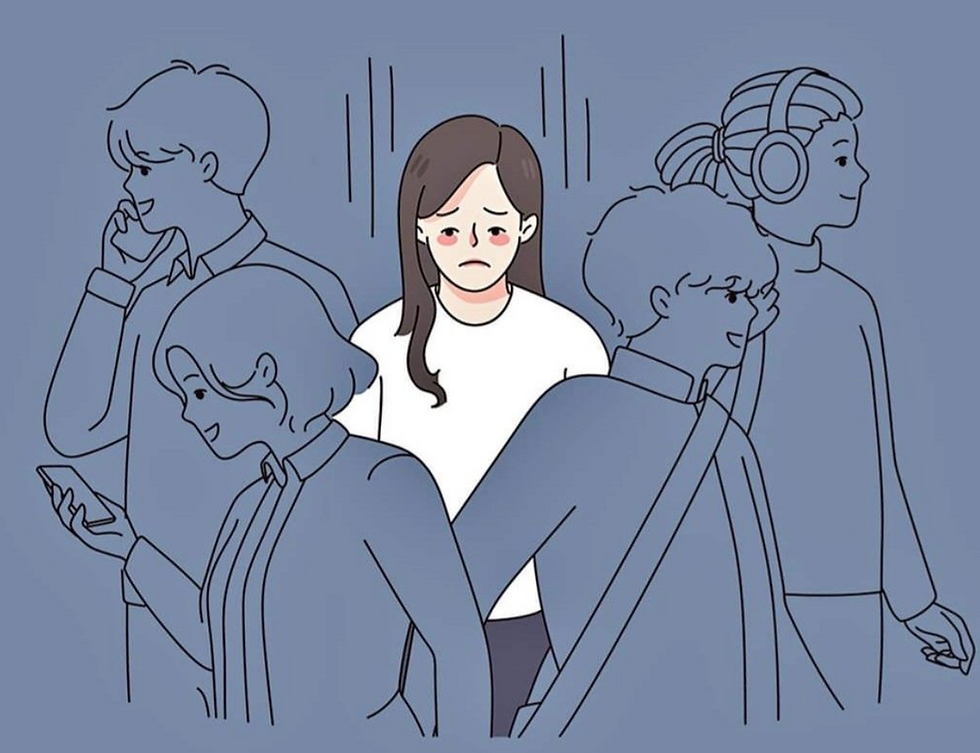
On the topic of loneliness, Cacioppo and Patrick (2008) showed that the subjective sense of isolation — distinct from objective social isolation — is one of the most robust predictors of physical and mental health deterioration. Significantly, people with hyper-independent traits may experience intense loneliness even when surrounded by others, as the quality of emotional connection is compromised by defensive detachment.
Similarly, research on romantic relationships shows that avoidant attachment is associated with lower relationship satisfaction, less communication of needs, and a higher likelihood of relationship breakdown (Mikulincer & Shaver, 2007). The paradox is clear: the strategy born to protect oneself from relational pain itself becomes a source of suffering.
Hyper-independence and trauma
Although not all hyper-independence patterns originate in traumatic experiences, research highlights a significant correlation with histories of emotional neglect, family instability, or early experiences in which showing need had led to negative consequences. Van der Kolk (2014) described how early relational trauma can durably alter the neurobiological systems involved in emotional regulation and the perception of safety, fostering the development of hypercontrol and self-sufficiency strategies as adaptive responses to an environment perceived as unpredictable or unsafe.
In these contexts, hyper-independence is not a character flaw, nor a conscious choice: it is a functional response to a context in which depending on others was genuinely risky. Recognizing this adaptive origin is essential both in clinical conceptualization and in therapeutic work, as it allows a judgmental frame to be replaced with a compassionate one.
Toward genuine autonomy: secure interdependence
The psychological literature draws a clear distinction between two forms of independence. The first is rigid self-sufficiency, characteristic of hyper-independence, in which autonomy functions as a defense rather than a choice. The second is what Mikulincer and Shaver (2007) describe as authentic autonomy, made possible only from a secure base: the ability to function independently and to ask for support when needed, without this compromising one's sense of self.
Ryan and Deci (2000), within the framework of Self-Determination Theory, distinguish between autonomy — understood as acting in accordance with one's authentic values and needs — and independence — understood as doing without others. Genuine autonomy is fully compatible with contextual reliance on others: asking for help, receiving care, and selectively trusting do not contradict it, but rather express it.
Therapeutic work with individuals presenting hyper-independence patterns aims precisely at this: not to make people "dependent," but to expand their relational repertoire, making it possible to choose closeness without triggering the defensive response. It is work that requires time, as it addresses internal working models often consolidated from early childhood — but research shows it to be possible, even in adulthood (Mikulincer & Shaver, 2007).
Conclusion
Hyper-independence is one of those patterns that contemporary culture tends to valorize — and this makes it harder to recognize as a source of suffering. Yet behind the image of someone who "needs no one," there is often a painful relational history, a nervous system that learned not to ask, and a psychological cost paid in silence.
True autonomy is not the absence of need. It is the freedom to choose connection — knowing that one will not lose oneself in the process.
Strategies that once served to protect oneself may become less necessary when experiencing sufficiently secure relationships. And it is precisely in the possibility of being vulnerable without losing oneself that many people begin to build a freer and more stable form of autonomy.
References
Ainsworth, M. D. S., Blehar, M. C., Waters, E., & Wall, S. (1978). Patterns of attachment: A psychological study of the strange situation. Lawrence Erlbaum Associates.
Bowlby, J. (1969). Attachment and loss: Vol. 1. Attachment. Basic Books.
Bowlby, J. (1973). Attachment and loss: Vol. 2. Separation: Anxiety and anger. Basic Books.
Bowlby, J. (1980). Attachment and loss: Vol. 3. Loss: Sadness and depression. Basic Books.
Cacioppo, J. T., & Patrick, W. (2008). Loneliness: Human nature and the need for social connection. W. W. Norton & Company.
Collins, N. L., & Feeney, B. C. (2004). Working models of attachment shape perceptions of social support: Evidence from experimental and observational studies. Journal of Personality and Social Psychology, 87(3), 363–383. https://doi.org/10.1037/0022-3514.87.3.363
Gross, J. J. (1998). Antecedent- and response-focused emotion regulation: Divergent consequences for experience, expression, and physiology. Journal of Personality and Social Psychology, 74(1), 224–237. https://doi.org/10.1037/0022-3514.74.1.224
Gross, J. J., & Levenson, R. W. (1997). Hiding feelings: The acute effects of inhibiting negative and positive emotion. Journal of Abnormal Psychology, 106(1), 95–103. https://doi.org/10.1037/0021-843X.106.1.95
Mikulincer, M., & Shaver, P. R. (2007). Attachment in adulthood: Structure, dynamics, and change. Guilford Press.
Ryan, R. M., & Deci, E. L. (2000). Self-determination theory and the facilitation of intrinsic motivation, social development, and well-being. American Psychologist, 55(1), 68–78. https://doi.org/10.1037/0003-066X.55.1.68
Van der Kolk, B. A. (2014). The body keeps the score: Brain, mind, and body in the healing of trauma. Viking.


Comments